Residence tax surcharge - Second homes
A growing number of tourist municipalities apply the authorised surcharge of 5% to 60% on the residence tax for second homes. The Loi de finances 2023 (2023 budget act) widened the number of eligible municipalities in high-pressure housing areas, from the 2024 tax year
Measure originators
A positive amount is revenue or savings for public finances; a negative amount is a cost or lost revenue.
Measure impact
Large cities (Paris, Lyon, Bordeaux) voted for the maximum rate of +60% for 2023.
Official references
Sources
Stated positions
Public statements by members of Parliament on this measure · 8 statements
« Cette situation prouve d’ailleurs que ce taux maximal, qui est utilisé par de plus en plus de communes, est insuffisant. Je suis certain qu’il faudra venir à ce taux majoré de 100 %, dès cette année je l’espère, sinon dans les années qui viennent. »
Translation: This situation also proves that this maximum rate, which is used by more and more municipalities, is insufficient. I am certain that we will have to move to this 100% surcharge rate, this year I hope, or otherwise in the years to come.
29 November 2023Parliamentary debate · senat.fr« Il vise à appliquer la majoration de THRS dans toutes les communes qui auraient de fait instauré une taxe sur les logements vacants. En effet, il n’aura échappé à personne que la première est la condition de la seconde. Il convient donc non pas de réserver cette surtaxe aux zones tendues, mais de l’élargir. »
Translation: It aims to apply the second-home council tax surcharge in all municipalities that have in fact introduced a tax on vacant housing. Indeed, it will have escaped no one that the former is conditional on the latter. This surtax should therefore not be reserved for tight-market areas, but extended.
29 November 2023Parliamentary debate · senat.fr« Nous souhaitons donner cette possibilité à l’ensemble des communes en l’absence de tout critère de tension, dont la définition peut soulever un certain nombre d’interrogations. Il y a un intérêt général à mettre en place ce type de fiscalité sur les résidences secondaires et nous souhaitons servir l’intérêt général. »
Translation: We wish to give this possibility to all municipalities without any tightness criterion, the definition of which may raise a number of questions. There is a general interest in introducing this type of taxation on second homes and we wish to serve the general interest.
29 November 2023Parliamentary debate · senat.fr« Permettez-moi néanmoins de partager l’expérience d’une commune qui a été classée en zone tendue et qui, à ce titre, a délibéré sur une majoration de 60 % de la taxe d’habitation. […] Voilà un bel exemple d’une expérience intéressante, quand on veut bien laisser la main aux élus locaux. »
Translation: Allow me nevertheless to share the experience of a municipality that was classified as a tight-market area and which, as such, voted a 60% surcharge on the council tax. [...] This is a fine example of an interesting experience, when one is willing to leave it to local elected officials.
29 November 2023Parliamentary debate · senat.fr« Il nous revient, à notre niveau, de prendre des dispositions à caractère général : augmentons le plafond de la taxe d’habitation sur les résidences secondaires jusqu’à 100 %, et laissons la possibilité aux élus locaux de moduler le taux en fonction des revenus des habitants ou de la situation de leur commune. »
Translation: It is up to us, at our level, to adopt general provisions: let us raise the cap on the second-home council tax to 100%, and let local elected officials modulate the rate according to the income of residents or the situation of their municipality.
29 November 2023Parliamentary debate · senat.fr« Le ministre peut-il nous indiquer le nombre exact de communes ayant fait passer la majoration de 20 % à 60 % ? […] Le Gouvernement a donc raison de vouloir avancer progressivement et prudemment. Je ne voudrais pas que le Sénat se mette à dos les petits propriétaires de résidence secondaire, qui verraient leur THRS augmenter trop fortement. »
Translation: Can the minister tell us the exact number of municipalities that have raised the surcharge from 20% to 60%? [...] The Government is therefore right to want to move forward gradually and cautiously. I would not want the Senate to antagonise small second-home owners, who would see their second-home council tax increase too sharply.
29 November 2023Parliamentary debate · senat.fr« De nombreuses communes de montagne connaissent pourtant une très forte tension immobilière sans pour autant appartenir à l’une ou l’autre des catégories mentionnées plus haut. Cet amendement propose d’étendre la possibilité de majorer la taxe d’habitation sur les résidences secondaires (THRS) à l’ensemble des communes classées en zone de montagne. »
Translation: Many mountain municipalities, however, experience very strong pressure on the housing market without belonging to either of the categories mentioned above. This amendment proposes to extend the possibility of applying the second-home council tax surcharge to all municipalities classified as mountain areas.
12 October 2023Amendment · assemblee-nationale.fr« Le plafond est trop faible pour être dissuasif, aussi il est proposé de rehausser le critère limitatif de 60% à 100% pour donner plus de liberté aux conseils municipaux afin de lutter contre la crise du logement. »
Translation: The cap is too low to be a deterrent, so it is proposed to raise the limit from 60% to 100% to give municipal councils more freedom to tackle the housing crisis.
12 October 2023Amendment · assemblee-nationale.fr





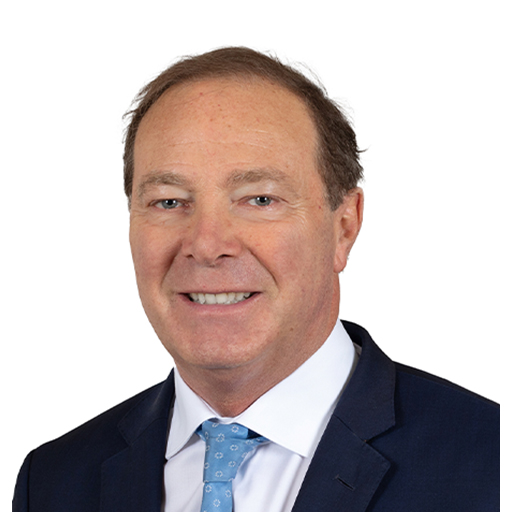


These statements are quoted verbatim with their source and date. They are separate from votes: only votes count in the analysis of political orientations. A position may have changed since.
Is a quote inaccurate or taken out of context? Report it via the contact page.
Procedure timeline
Follow the progress of this fiscal measure through the different stages of the parliamentary procedure.
Administrative implementation
Entrée en vigueur de la mesure et mise en œuvre par l'administration
Vote in deliberative council
Publication in Official Journal
President of the Republic signature
Publication au Journal officiel